
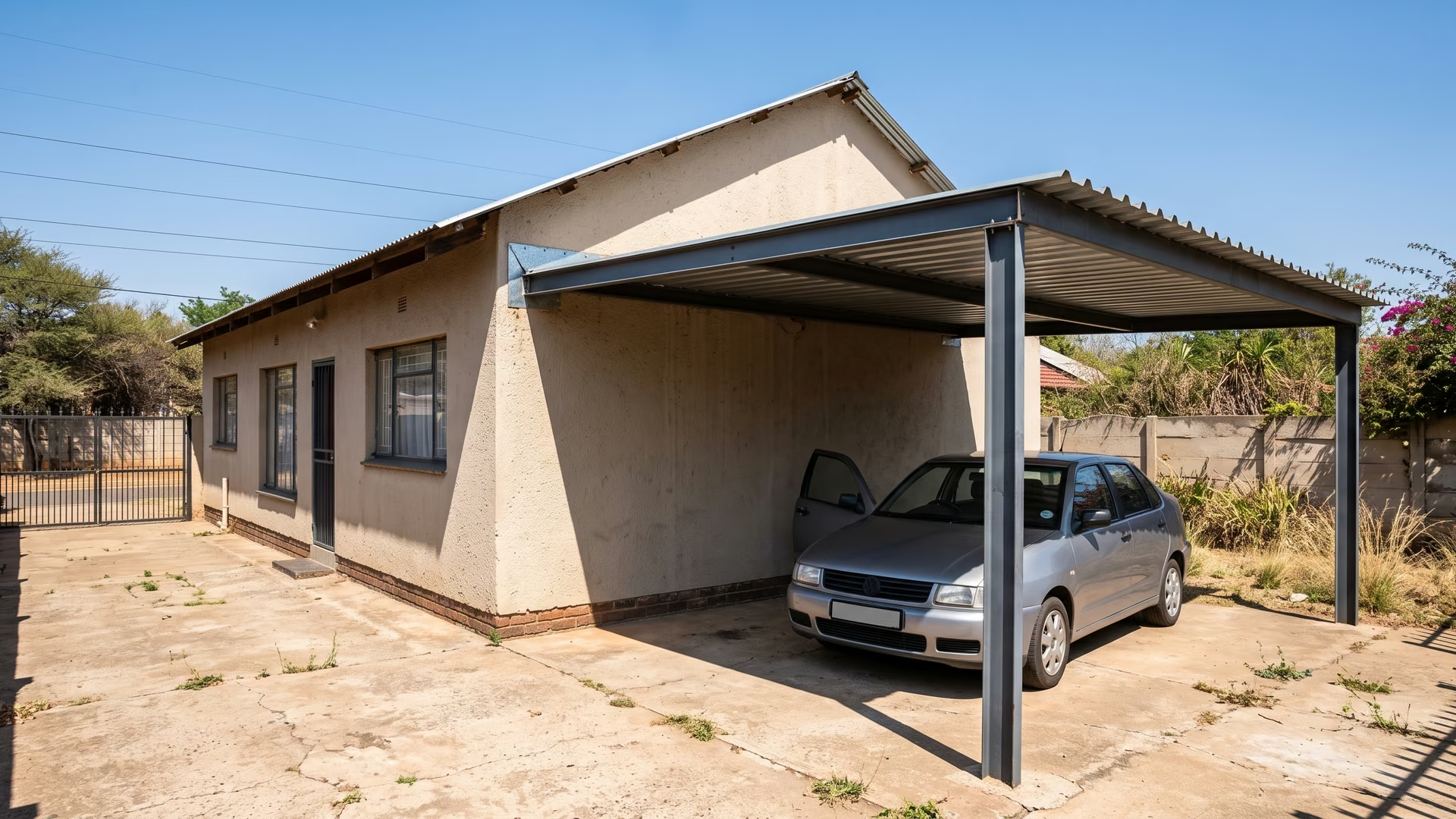
An attached carport and a freestanding one differ in exactly one structural respect - where the roof is carried - and everything else follows from it.
Attached against freestanding
| Attached / lean-to | Freestanding | |
|---|---|---|
| Posts | One side only | All four corners |
| Door clearance | Full width against the wall | Post sits in the opening arc |
| Water | Flashing at the wall is essential | No wall junction to seal |
| Wall condition | Must carry the load | Irrelevant |
| Roof pitch | Set by the wall height | Free choice |
The flashing is the whole job
Where an attached roof meets the house is the one detail that decides whether the build is a success. Water running off the roof has to be thrown clear of the brickwork, not allowed to track down behind it. That means a flashing dressed into the wall and sealed - not a bead of silicone along the sheet edge. It is the line item most often missing from a cheap quote, and the one that shows up as damp on the inside of the wall two summers later.
The same applies to the pitch. An attached roof takes its height from the wall, so the fall is constrained; too shallow and Highveld storm runoff backs up under the sheet laps.
When a cantilever is the better answer
A cantilever carport gets rid of posts on one side without touching the house at all, which is the usual reason for wanting to attach - the roof is carried on one line of posts set back from the edge. That suits a boundary wall you are not allowed to fix into, or a wall that will not carry a load.
Either way the footing and the fixing are decided at the measure, on the wall you actually have. Carport installation in Pretoria covers what the crew checks first.
Decide it at the measure
The wall, the fixing and the flashing are assessed on site - see carport installation in Pretoria.
Before you build
The rest are on carport questions answered for Pretoria - including what closing in a side does to the frame: How to Cover Carport Sides.
Related detail
Can it attach to a boundary wall instead?
Yes, but only if the wall is yours and built to carry a load - many boundary walls are neither. Where it is not an option, a cantilever carport gives the same clear side without touching the wall at all.
Does it matter whether the wall is plastered brick or cavity?
Yes, because it changes the fixing. Solid brick takes a through-bolt or a resin anchor into the brick itself; a cavity wall needs the fixing to reach the inner leaf. Generic anchors into plaster are the failure you see later.
KB Carports builds carports in Pretoria across Tshwane - free on-site measure, and a written quote that states the steel, the footing method and the clearance height.