
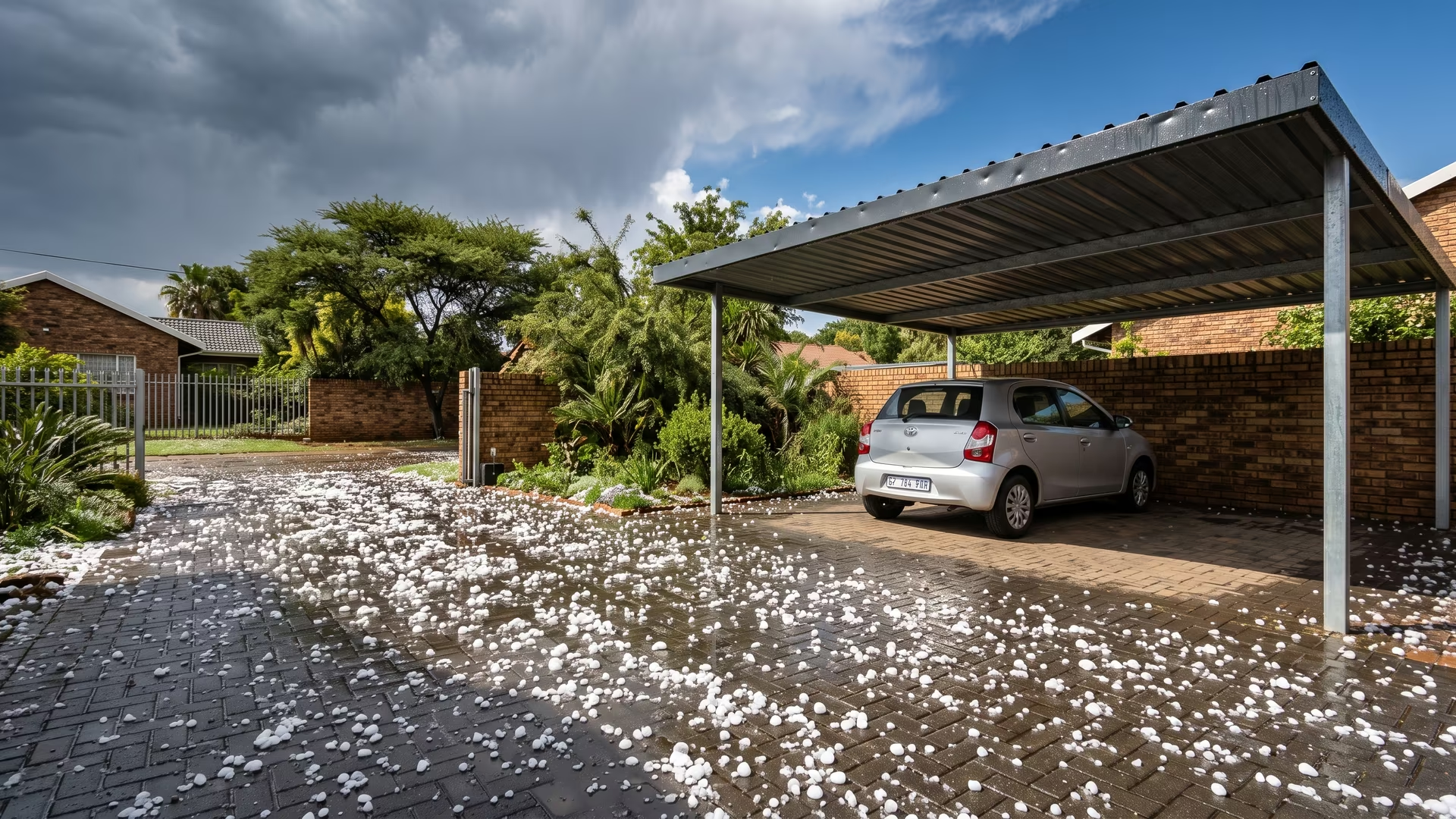
Why panel dents cost more than the glass
A cracked windscreen is a single replacement part. A dented bonnet, roof and boot lid is paintless dent removal or panel beating across three large surfaces, and on a metallic or pearl finish the respray has to blend into adjacent panels to match. That is why a hail claim is usually driven by the horizontal panels rather than by the glass, and why the excess on a hail claim is rarely worth carrying twice.
Ice that arrives at an angle also chips the leading edges - the front of the bonnet, the top of the door frames, the mirror housings. Those chips go through the clear coat to the primer and are where rust starts on an older car.
What actually stops hail, and what does not
| Cover | Stops hail? | Why |
|---|---|---|
| IBR or corrugated steel roof | Yes | A rigid deep-ribbed sheet takes the impact and spreads it into the purlins. It takes the dent; the car does not. |
| Powder-coated aluminium roof | Yes | Rigid sheet, same principle, lighter and rust-proof. |
| Polycarbonate sheeting | Partly | Impact-rated grades hold up; thin economy sheet can crack in large hail. |
| Shade net / shade cloth | No | Knitted HDPE is porous and flexible. It blocks UV and heat; a hailstone passes through or stretches it onto the car. |
| Car cover / blanket | Barely | Padding absorbs a little energy and moves in wind. Not a structure. |
This is the single clearest split between the two structures KB builds. A shade net carport is the right answer to sun, UV and cabin heat and the wrong answer to hail. A steel carport with IBR sheeting, or an aluminium carport, is the one that stops it. The full comparison is under carport vs shadeport.
Roof gauge and pitch matter more than size
Two carports of identical footprint behave differently in hail if the sheeting gauge differs. Thinner economy sheet dents visibly on the first bad storm; it still protects the car, but it looks beaten afterwards and the dents hold water at the ribs. Pitch helps too - a roof with a real fall sheds hail and meltwater instead of letting it pool at a flat seam. Ask for the sheeting gauge in writing on any quote, because it is the specification most often quietly dropped to win a price. What to ask for is set out under carport installation.
Where this matters most
Anywhere on the Highveld with an open aspect and nothing upwind to break a summer storm. In greater Tshwane that is felt hardest in the far north beyond the Magaliesberg and out on the eastern plots, where there is no neighbouring roofline to take the edge off - see Akasia, Soshanguve and the far north and Cullinan, Bronkhorstspruit and the eastern plots. Bands for a solid-roof structure are on the Pretoria carport price list, and the whole range of carports in Pretoria can be specified with hail-rated sheeting.
Hail and carport questions
Does a shade net carport stop hail?
No. Knitted shade cloth is porous and flexible, so a hailstone either passes through it or stretches it down onto the panel. Shade net blocks UV and cabin heat, which is a different job. Only a rigid roof - IBR steel, aluminium or impact-rated polycarbonate - stops hail.
Which panels take hail damage first?
The horizontal ones: bonnet, roof and boot lid. They face straight up, so they absorb almost all of the impact, and they are the large panels whose repair drives the cost of a claim.
Will the carport roof itself dent?
Yes, it can - and that is the point. The sheet takes the impact instead of the car. Thinner economy gauge dents visibly on the first bad storm. Ask for the sheeting gauge in writing, because it is the specification most often dropped to win a price.
Is a covered structure cheaper than a hail claim?
Yes. A single hail claim on the horizontal panels of one car is commonly the same order of cost as a steel single carport, before the excess and the loss of use while the car is at a panel shop. KB quotes the structure so that comparison can be made on paper.